
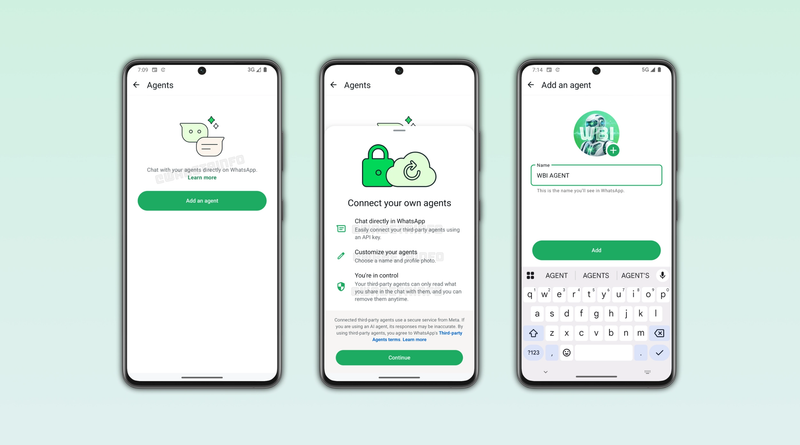
WhatsApp Third Party AI Agents: Shocking $16.5 Billion Threat Looms
The fight over WhatsApp third party AI agents has quietly turned into one of the biggest antitrust battles in tech, and it has a genuine India angle that most global coverage skips entirely. Meta blocked outside AI chatbots from its Business API in January 2026, regulators in Brazil and the EU forced it to reverse course within months, and Meta is now staring at a possible fine worth billions of dollars. Here’s the full timeline, who got blocked, who fought back, and where that leaves Indian apps like Haptik and PuchAI.
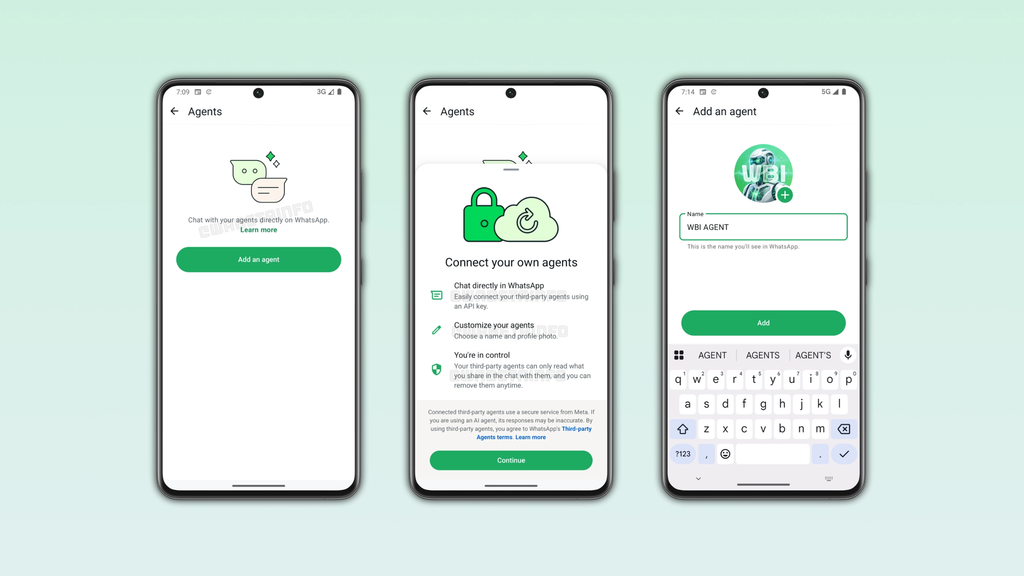
What Exactly Happened With WhatsApp Third Party AI Agents?
Meta first updated its WhatsApp Business API terms in October 2025 to bar general-purpose AI chatbots from operating on the platform. The policy fully took effect on January 15, 2026, banning any AI provider whose primary service is a broad, open-ended chatbot, rather than a narrow business function, from using WhatsApp’s Business Platform. Meta’s own justification was largely technical: the company said a surge of high-volume, general-purpose AI bots placed real strain on infrastructure that was never designed to support that kind of traffic.
What Does the Policy Actually Say?
The updated Business API terms behind the WhatsApp third party AI agents dispute don’t ban “AI” in general, they specifically target AI model providers, companies built around large language models or generative AI platforms whose product is essentially the chatbot itself, from distributing that chatbot through WhatsApp. New signups were already subject to the restriction from October 2025 onward, with existing providers given until January 15, 2026 to wind down or restructure their WhatsApp presence before enforcement began in full.
Which Apps Actually Got Blocked?
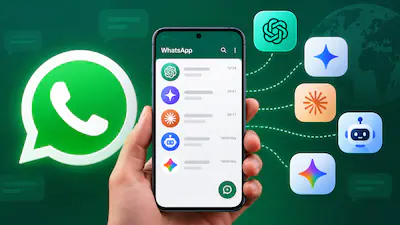
The WhatsApp third party AI agents ban hit some genuinely major names. OpenAI’s ChatGPT, Microsoft Copilot, and Perplexity were all cut off from the WhatsApp Business API, along with smaller assistants like Luzia and Poke. Two India-linked names were caught in the same net: Haptik, the AI company owned by Reliance, and PuchAI, a multilingual chatbot popular with Indian users. Meta AI, its own built-in assistant, faced no such restriction and continued operating on WhatsApp without limits.
What’s Still Allowed on WhatsApp?
Despite the scale of the WhatsApp third party AI agents ban, plenty of AI-powered functionality survived it. Structured, purpose-specific bots that handle a clearly defined business task, customer support queries, appointment bookings, order tracking updates, delivery notifications, or short surveys, remain fully permitted. The line Meta drew wasn’t “no AI,” it was “no general-purpose AI assistant competing head-on with Meta’s own chatbot,” which is exactly why businesses using narrow WhatsApp bots for support haven’t noticed any disruption.
The trickier question is what happens to a business bot that’s technically built on a large language model but scoped narrowly, say, a retailer’s support bot that only answers questions about its own orders. Meta’s policy language targets primary function rather than underlying technology, so a scoped bot like that should, in principle, remain compliant even if it’s powered by the same kind of model that runs ChatGPT.
Why Critics Don’t Buy Meta’s Technical Explanation
Meta’s official reasoning for the WhatsApp third party AI agents ban centers on infrastructure strain, but critics, including the regulators who later intervened, have pointed to a simpler explanation: the policy conveniently cleared competing AI assistants off the one platform where Meta’s own AI assistant already had a substantial head start. Meta AI had actually been live inside WhatsApp since April 2024, with India among the very first countries to see it in testing, and had already expanded to dozens of countries well before the October 2025 ban on rivals.
The European Commission’s own objections leaned specifically on this timing, arguing that a policy which exempts a company’s own long-established product while blocking rivals looks less like a capacity fix and more like a competitive advantage.
There’s also a size problem baked into Meta’s brief per-message fee workaround. A per-message charge that a well-funded company like OpenAI can absorb without much thought is a far bigger hurdle for a smaller, regional AI startup working with thinner margins, which is exactly the kind of company India’s own CCI market study had already flagged as most at risk from platform-level gatekeeping.
How Regulators Around the World Pushed Back
Governments outside India moved fast once the WhatsApp third party AI agents ban took effect. Italy’s competition authority intervened as early as December 2025, warning the policy could cause irreversible harm to AI market competition. Brazil’s antitrust watchdog, CADE, followed in January 2026, ordering Meta to suspend the policy for Brazilian users and opening a formal investigation into whether it was anti-competitive.
The European Commission escalated furthest. It opened its own antitrust investigation, issued a formal Statement of Objections to Meta on February 9, 2026, and eventually handed down an interim order on June 9, 2026, giving Meta five working days to fully restore the access terms that existed before the original ban.
Meta had briefly tried a middle path in March 2026, letting third-party bots back into Brazil and Italy at a cost of $0.0625 per non-template message rather than free access, but the Commission explicitly called that arrangement “equivalent to the previous access ban” rather than a genuine fix, since charging for access that used to be free still shut most smaller AI providers out in practice. ChatGPT access was finally restored across all 30 EEA countries by July 13, 2026, under the full pre-ban terms rather than the paid workaround.
Meta Is Appealing, and the Numbers Are Enormous
Meta has rejected the EU’s order outright, calling it regulatory overreach that effectively forces the company to subsidize rivals like OpenAI for free, and has said it will appeal. The stakes of losing that appeal are significant: EU antitrust rules allow fines of up to 10% of a company’s global annual revenue, which based on Meta’s recent revenue works out to roughly $16.5 billion. Whatever happens with the appeal, the WhatsApp third party AI agents dispute has already become a genuine test of how far competition regulators will go to keep dominant messaging platforms open to outside AI tools.
Where Does That Leave India?
This is the part of the WhatsApp third party AI agents story that hasn’t gotten nearly enough attention. India’s Competition Commission published a market study back in October 2025 flagging exactly the kind of concern at the heart of this case, how dominant platforms and algorithmic gatekeeping can box out smaller AI developers. Yet unlike Italy, Brazil, and the entire European Economic Area, there’s no confirmed report of the CCI ordering Meta to suspend or reverse the ban for Indian users specifically.
That matters because two genuinely Indian AI products, Reliance’s Haptik and the multilingual assistant PuchAI, were blocked by the same policy that hit ChatGPT and Perplexity. While regulators in Brasília and Brussels forced Meta’s hand, no equivalent order has been confirmed coming out of India, even though the CCI’s own research had already identified the underlying competition problem months earlier.

It’s not as though the CCI has a history of going easy on WhatsApp either. In November 2024, it fined Meta Rs. 213.14 crore over WhatsApp’s 2021 privacy policy update, a case Meta is still contesting, with the Supreme Court deferring a hearing on the company’s appeal as recently as February 2026. A regulator willing to fight WhatsApp that hard over a data-sharing complaint isn’t an obviously toothless one, which makes its apparent silence on the WhatsApp third party AI agents question, so far, more of an open question than a settled non-issue.
Why This Fight Is Bigger Than Just ChatGPT
Part of what makes the WhatsApp third party AI agents dispute significant is the sheer size of WhatsApp’s global footprint. Beyond the EU, Brazil, and India, other countries with enormous WhatsApp user bases, including Indonesia, Nigeria, and Pakistan, have similar dynamics at play: a dominant messaging platform, a growing ecosystem of local AI chatbot startups, and Meta’s own AI assistant competing directly on the same app. None of those markets have produced a confirmed regulatory intervention yet, but the EU and Brazil rulings give competition authorities elsewhere a ready-made precedent to study if similar complaints surface locally.
What Could Happen Next?
Meta’s appeal against the EU’s order is still working its way through the process, and the outcome there could shape how every other regulator, including India’s CCI, decides to approach the WhatsApp third party AI agents question going forward. If the EU’s interim order survives Meta’s appeal, it becomes a template other competition authorities can point to, and India’s CCI already has the market study on record to justify similar action if it chooses to act.
What Should Indian Businesses and Users Do Right Now?
For businesses running structured WhatsApp bots, customer support, order tracking, appointment reminders, nothing changes about the WhatsApp third party AI agents ban, since that category was never targeted by it. For anyone hoping to use a general-purpose assistant like Haptik or PuchAI directly through WhatsApp the way EU and Brazilian users now can with ChatGPT, the honest answer is that no confirmed restoration for India has been reported yet.
It’s worth checking each provider’s own standalone app or website directly rather than assuming WhatsApp access has returned, since that status can change quickly as regulatory pressure builds. For more on how AI companies are navigating platform-level rules, our coverage of WhatsApp’s recent polling feature rollout looked at a very different kind of feature update on the same platform, and our coverage of OpenAI’s GPT-6 Astra release covered how ChatGPT itself, one of the apps caught up in this very ban, is evolving on other fronts. Full details of the EU’s order against Meta are available on the European Commission’s official press release.
For more technology and AI updates, check out our Technology section.
Frequently Asked Questions
What is the WhatsApp third-party AI chatbot ban about?
Meta updated WhatsApp’s Business API terms in October 2025 to bar general-purpose AI chatbots like ChatGPT, Perplexity, and Copilot from the platform, with the policy fully enforced from January 15, 2026. Meta says the change was needed to protect infrastructure from high-volume general-purpose bot traffic.
Which AI chatbots got banned from WhatsApp?
ChatGPT, Microsoft Copilot, Perplexity, Luzia, and Poke were all affected, along with India-linked apps Haptik (owned by Reliance) and PuchAI. Meta’s own Meta AI assistant was not restricted.
Is ChatGPT back on WhatsApp now?
In the European Economic Area, yes, access was restored by July 13, 2026, after an EU antitrust order. In Brazil and Italy, regulators separately forced exemptions earlier in 2026. No equivalent restoration has been confirmed for India.
Are structured WhatsApp business chatbots still allowed?
Yes. Bots that handle specific, defined tasks like customer support, bookings, order tracking, or delivery notifications were never targeted by the ban and continue operating normally.
Could Meta be fined over this?
Yes, potentially. Under EU antitrust rules, Meta could face a fine of up to 10% of its global annual revenue, roughly $16.5 billion, if its appeal against the European Commission’s order fails.
Why did Meta ban third-party AI chatbots from WhatsApp in the first place?
Meta’s official reason is that a surge of high-volume, general-purpose AI bot traffic strained infrastructure the WhatsApp Business API wasn’t built to support. Critics, including EU regulators, have suggested the timing, right as Meta AI was rolling out on WhatsApp, is more than a coincidence.