
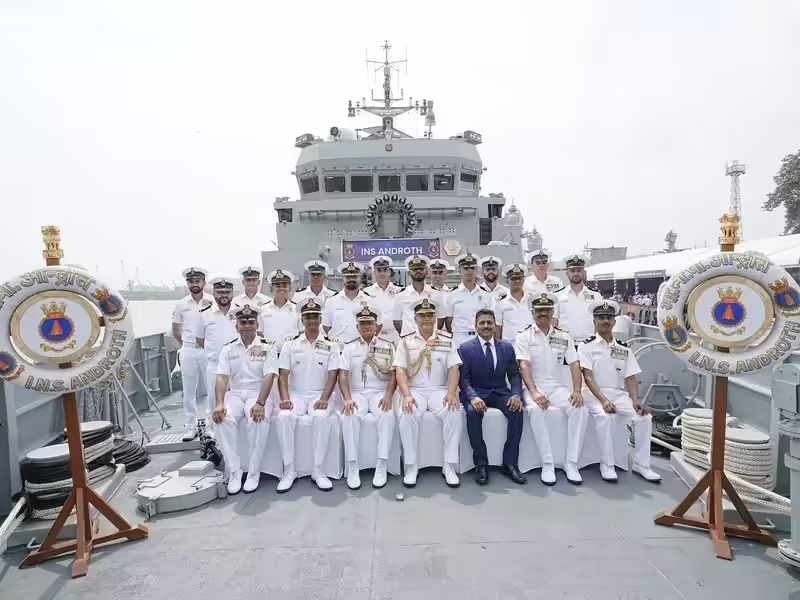
How to Join the Indian Navy: Amazing Complete Guide With 7 Entry Schemes
How to join the Indian Navy depends entirely on which stage of life you’re starting from, straight after Class 12, right after an engineering degree, or somewhere in between, and each path has its own exam, age window, and training route. Here’s a complete, currently accurate breakdown of all 7 entry schemes, the real selection process, what you’ll actually get paid, and the fitness standards you’ll need to clear.
Key Takeaways:
- How to join the Indian Navy comes down to 7 main routes: NDA, 10+2 (B.Tech) Cadet Entry, CDS, Agniveer (SSR/MR), Short Service Commission, University Entry Scheme, and direct technical entries.
- NDA and CDS exams are held twice a year through UPSC; the most recent exam was held on September 13, 2026, with the next cycle expected around April 2027.
- Agniveer sailors currently earn between roughly ₹21,000 and ₹28,000 in-hand per month across their 4-year term, plus a tax-free Seva Nidhi payout of around ₹11.71 lakh at the end.
- Only 25% of each Agniveer batch is currently guaranteed retention into regular service, a figure under government review since the first batch completes its term in October 2026, though no change has been officially confirmed yet.
- Most schemes require unmarried status at the time of joining, and officer-track entries typically take 10 to 12 months from application to joining the academy.
There isn’t just one way to join, the Indian Navy runs 7 distinct entry routes depending on your education level and age, and picking the right one from the start saves months of wasted preparation.
| Scheme | Who It’s For | Typical Age Band |
|---|---|---|
| NDA | Class 12 pass/appearing, PCM required | 16.5-19.5 years |
| 10+2 (B.Tech) Cadet Entry | Class 12 with PCM, via JEE Main rank | Roughly 16.5-18.5 years |
| CDS (for INA) | Engineering graduates | Roughly 19-24 years |
| Agniveer (SSR/MR) | Class 10 or 12 pass | 17.5-21 years |
| Short Service Commission | Graduates/postgraduates, branch-specific | Roughly 19-25 years |
| University Entry Scheme | Pre-final/final year B.E./B.Tech students | 21-24 years |
| Direct technical entries | Naval Architecture, Law, Education, Music, etc. | Varies by branch |
Every age band above shifts slightly with each specific notification, so treat these as a starting reference rather than the exact cutoff for your own application year. If you’re comparing other real government exam routes too, our coverage of RRB JE Recruitment 2026 walks through a completely different recruitment process worth a look.
NDA Entry: Joining Right After Class 12
The National Defence Academy route is the most common way to join the Indian Navy straight after school, through a UPSC exam open to unmarried candidates aged roughly 16.5 to 19.5 who have passed or are appearing for Class 12 with Physics, Chemistry, and Mathematics.
Since a 2021 Supreme Court judgment, women are eligible for NDA on the same terms as men across all wings, including the Navy. Careers360’s coverage of that verdict explains how the entry criteria changed. The most recent NDA exam was held on September 13, 2026, and the next opportunity, NDA (I) 2027, is expected around April 2027, with the notification itself typically released a few months earlier. Always check joinindiannavy.gov.in and upsc.gov.in directly for the live notification rather than relying on a projected date.

10+2 (B.Tech) Cadet Entry Scheme: Direct Entry via JEE Main
This scheme skips a separate Navy written exam entirely, shortlisting is based purely on your JEE (Main) rank in the year you apply, making it a genuinely different path from NDA even though both start right after Class 12.
To qualify, you’ll need at least 70% aggregate in PCM and 50% in English at the Class 10 or 12 level, plus a JEE Main attempt in the relevant year. As an example of how the age band is set, the January 2026 batch required candidates born between January 2, 2007, and July 1, 2009, though this exact window shifts with every new batch notification. Selected candidates train for 4 years at the Indian Naval Academy in Ezhimala, Kerala, earning a B.Tech degree alongside a Permanent Commission as Sub-Lieutenant on completion.
The Combined Defence Services exam, also run by UPSC, is how engineering graduates join the Indian Naval Academy for a Permanent Commission, and unlike the Army and Air Force wings of CDS, the Navy specifically requires a bachelor’s degree in engineering rather than any graduate degree.
The exact age band cited across sources ranges roughly from 19 to 24, so confirm the precise cutoff dates against the specific year’s official notification rather than a general estimate. Like NDA, the CDS exam runs twice yearly, with the most recent one also held on September 13, 2026, and the next cycle, CDS (I) 2027, expected around April 2027. Final-year engineering students can apply with proof of their degree required later at the SSB stage.
Agniveer Entry: The 4-Year Enlisted Pathway
Agniveer is the entry-level, non-officer pathway into the Navy, open to Class 10 pass candidates (Matric Recruit) or Class 12 pass candidates with Maths and Physics (Senior Secondary Recruit), aged between 17.5 and 21, and it remains the current scheme name and structure as of September 2026.
| Year | Gross Monthly Pay | In-Hand Pay |
|---|---|---|
| Year 1 | ₹30,000 | ₹21,000 |
| Year 2 | ₹33,000 | ₹23,100 |
| Year 3 | ₹36,500 | ~₹25,580 |
| Year 4 | ₹40,000 | ₹28,000 |
On completing the 4-year term, an Agniveer receives a tax-free Seva Nidhi payout of roughly ₹11.71 lakh, built from their own monthly contribution matched by the government plus accrued interest. Here’s the part worth being careful about: only 25% of each batch is currently guaranteed retention into regular service, and since the very first Agniveer batch completes its 4-year term in October 2026, this retention percentage is under active government review right now. Outlook India’s explainer on the retention debate covers the different retention figures being discussed, but no change has been officially confirmed as of this writing, so don’t plan around a higher number until it’s actually announced.
Short Service Commission and University Entry Scheme
Short Service Commission is a graduate-entry officer route across branches like Executive, Education, Engineering, Electrical, Naval Constructor, and Law, typically requiring 60% aggregate in a relevant degree and an initial tenure of 10 to 12 years that can be extended.
The University Entry Scheme works differently altogether, it’s not an open application at all, but a campus recruitment process for pre-final and final-year B.E./B.Tech students, who must have studied Physics, Chemistry, and Mathematics at the Class 12 level and maintained at least 60% aggregate through their engineering course. If you’re exploring other real government exam routes right now, our coverage of RRB PO vacancies walks through a completely different recruitment process worth comparing against.
Selection Process: SSB Interview and Medical Exam Explained
Every officer-track entry, whether NDA, CDS, or the 10+2 B.Tech scheme, converges on the same core selection process once you clear the written stage or JEE shortlisting: a 5-day Services Selection Board interview, followed by a medical examination.
Day 1 covers screening tests, an Officer Intelligence Rating test and a Picture Perception and Description Test. Days 2 through 4 involve psychology tests, group testing officer tasks, and a personal interview, and Day 5 is the conference, where assessors decide on recommendations. Testbook’s breakdown of the 5-day SSB procedure goes through each day in more detail if you want to prepare specifically for it.
Candidates recommended at SSB then undergo a medical examination lasting several days. From written exam to actually joining the academy, the whole officer-entry process typically takes somewhere around 10 to 12 months, though this varies enough by batch and vacancy count that it should be treated as a rough planning estimate rather than a guarantee. In completely different news this week, our coverage of will IPL 2027 have 12 teams looked at a viral cricket rumor worth a read if you need a break from exam prep.
Physical Fitness Standards You’ll Need to Meet
The most commonly cited minimum height requirement is 157 cm for men and 152 cm for women, with a 5 cm relaxation for candidates from Gorkha communities and specific hill regions of Northeast India, Garhwal, and Kumaon, though exact figures have been revised over the years, so check the official height-weight chart for your specific entry scheme before assuming a number applies to you.
Vision standards generally require 6/6 in the better eye and 6/12 in the weaker eye for non-technical branches, with somewhat stricter or more lenient limits depending on the specific technical branch, and colour blindness is disqualifying across the board. A basic running fitness test is part of most physical assessments, though the exact distance and time limit differ meaningfully between officer SSB tasks and sailor-level recruitment rallies, so rely on your specific scheme’s official notification rather than a single number you find online. In other major news from this week, our Hindi-language report on जनता दल यूनाइटेड की बिहार रणनीति covered a significant political story worth checking out.
For more education and career guidance, check out our How To section.
How to join the Indian Navy after Class 12?
The two main routes are the NDA exam (UPSC, twice yearly) and the 10+2 (B.Tech) Cadet Entry Scheme, which shortlists candidates by JEE Main rank instead of a separate Navy exam.
How to join the Indian Navy after graduation?
Engineering graduates can apply through the CDS exam for the Indian Naval Academy, while other graduates can apply for Short Service Commission across branches like Executive, Education, or Law depending on their degree.
What is the age limit to join the Indian Navy?
It depends on the scheme: roughly 16.5-19.5 for NDA, 17.5-21 for Agniveer, and 19-25 for graduate-entry schemes like CDS and Short Service Commission, with exact cutoffs changing per notification.
How much does an Agniveer in the Navy get paid?
Agniveer pay rises from about ₹21,000 in-hand in Year 1 to ₹28,000 in Year 4, plus a tax-free Seva Nidhi payout of roughly ₹11.71 lakh at the end of the 4-year term.
What is the selection process to join the Indian Navy as an officer?
A written exam or JEE Main-based shortlisting, followed by a 5-day SSB interview covering psychology tests, group tasks, and a personal interview, then a medical examination and a final merit list.