
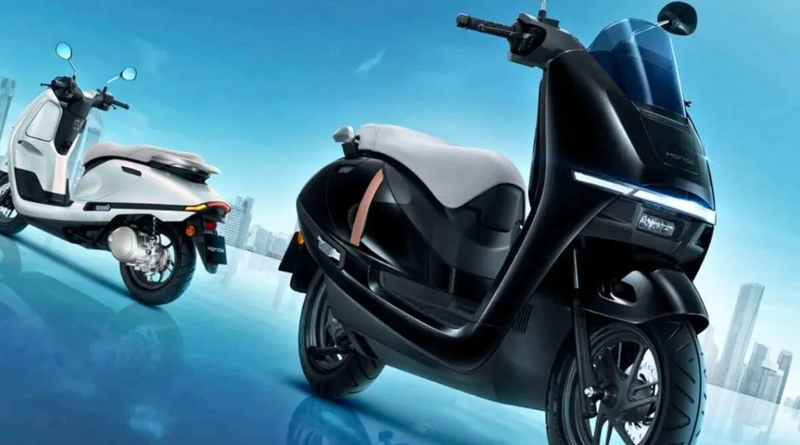
Honda Has Filed a Design Patent for the UC3 Scooter: Amazing 122 km Range Revealed
Honda has filed a design patent for the UC3 scooter in India, according to intellectual property filings spotted this week, adding a second electric two-wheeler to the brand’s India-bound pipeline alongside the recently showcased QC3. The UC3 is not a concept — it already went on sale in Thailand and Vietnam earlier this year, and the Indian filing simply protects its design in one more market.
What a Design Patent Filing Actually Signals
A design patent is primarily an intellectual-property safeguard, not a launch announcement. Automakers routinely file these registrations in markets where a global product might eventually arrive, long before pricing, production or a launch date gets confirmed. So while Honda has filed a design patent for the UC3 scooter in India, that alone does not guarantee an Indian debut — it simply keeps the option open and stops rivals from copying the design locally in the meantime.
What the UC3 Looks Like and What Powers It
Honda’s own global newsroom describes the UC3 as a fixed-battery electric commuter built around an “Intelligent Urban Life Partner” concept, positioned as the electric equivalent of a 110cc combustion scooter. It is the first Honda two-wheeler to use a fixed lithium iron phosphate (LFP) battery pack, rated at roughly 3.2 kWh, paired with an in-house wheel-side motor producing a peak output of 6.0 kW — comparable to around 8 bhp.
Honda’s official figures put the UC3’s certified cruising range at 122 km per charge under WMTC testing in Thailand. Indian and Southeast Asian outlets covering the scooter have cited a top speed of around 80 km/h, though Honda has not published an official top-speed figure for the model, so that number should be treated as media-reported rather than confirmed.
Charging comes via the CHAdeMO-for-two-wheelers standard, with a 20-80% top-up taking roughly two hours on the faster 1200W charger, or around five hours using the standard 450W unit. Riders get three selectable modes — Standard, Sport and Econ — plus a reverse-assist mode for tighter parking manoeuvres.
Design Details: Where the UC3 Borrows From
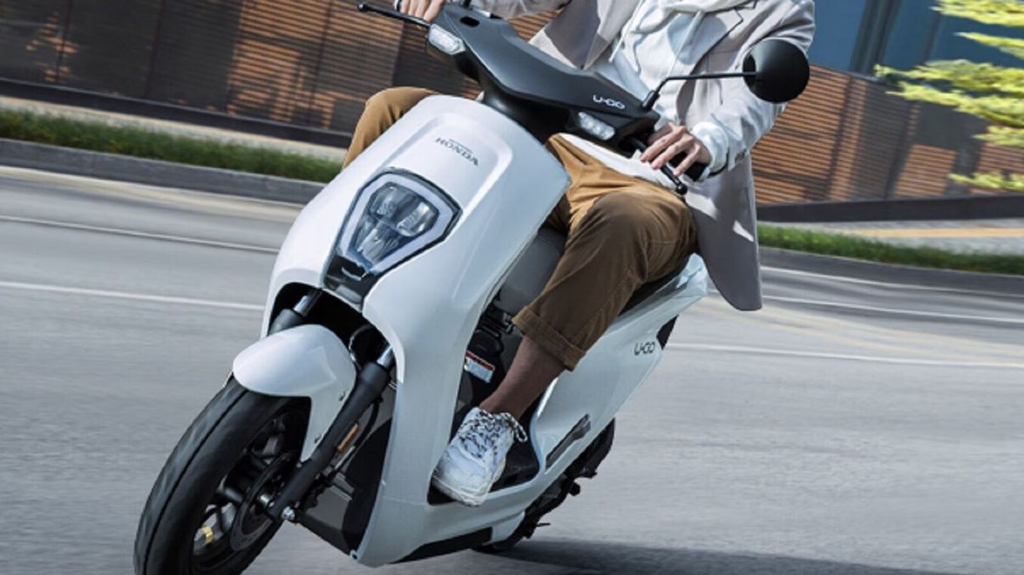
The UC3’s styling blends a maxi-scooter stance with neo-retro proportions, built around flowing body curves and a distinctive arched tail section. Up front, a three-piece LED daytime running light doubles as turn indicators, sitting above bi-chromatic headlights, with the charging flap built into the windshield housing. The scooter also carries a horizontal signature light first seen on Honda’s WN7 electric motorcycle, alongside a 5-inch TFT instrument cluster with Honda RoadSync connectivity, a Type-C USB port, keyless Smart Key start, and roughly 26 litres of underseat storage.
In Thailand, the UC3 is priced at THB 142,600 (about Rs 4.10 lakh) before incentives, dropping to roughly THB 132,600 (about Rs 3.82 lakh) with local subsidies applied — figures that reflect Thailand’s market conditions and are not indicative of any future Indian pricing.
Patent Filed, But Will Honda Launch the UC3 in India?
The bigger question is whether the design filing turns into an actual India launch. Honda already has a patchy track record with electric scooters in the country — both the Activa e: and the QC1 were discontinued domestically after weak sales, and Honda remains one of the few mainstream two-wheeler brands without a meaningful presence in India’s fast-growing electric segment, where Automobile buyers increasingly have plenty of established options to choose from.
That track record is exactly why analysts are treating the fact that Honda has filed a design patent for the UC3 scooter as a strategic placeholder rather than a confirmed product roadmap. The more likely near-term move is Honda watching how the India-focused QC3 — which carries a fixed 3 kWh battery and a claimed 145 km range — performs after its local launch, before deciding whether the UC3 is worth bringing over as well.
How the UC3 Fits Into Honda’s Broader India EV Push
Our earlier coverage of the VinFast Rasad electric scooter’s design patent followed a similar pattern — a global electric two-wheeler brand securing its design rights in India well before confirming a local launch. Design patents like these have become a fairly standard first step for international scooter makers testing the waters in India’s electric two-wheeler market, which remains dominated by domestic brands such as Ola Electric, TVS, Bajaj and Ather.
For now, the safest reading is that Honda has filed a design patent for the UC3 scooter to protect its options, not to signal an imminent showroom arrival. Genuine signals to watch for would be CKD (completely knocked down) import announcements, dealer pilot programmes, or an official Honda India statement — not the patent filing itself.
Frequently Asked Questions
Has Honda confirmed the UC3 will launch in India? No. Honda has only filed a design patent for the UC3 scooter as of August 2026; no launch date, pricing or production plan has been announced for India.
What makes the Honda UC3 different from other Honda electric scooters? It is Honda’s first electric scooter to use a fixed lithium iron phosphate (LFP) battery, unlike the swappable-battery Activa e: and CUV e: models sold elsewhere.
What is the Honda UC3’s range and battery size? Honda’s official figures list a roughly 3.2 kWh LFP battery delivering a certified cruising range of 122 km per charge under WMTC testing conditions in Thailand.
Where is the Honda UC3 currently sold? The UC3 is currently on sale in Thailand and Vietnam, manufactured at Thai Honda with plans to add local production in Vietnam.