
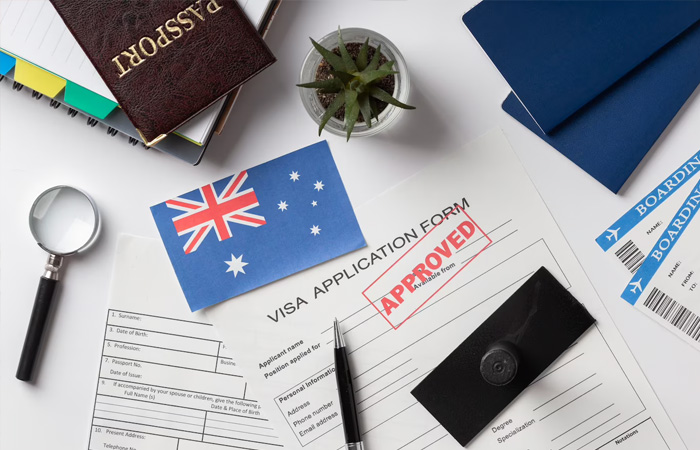
Australia Student Visa: Shocking 24% Rejection Rate and the Real 2026 Process
An Australia student visa (Subclass 500) has gotten noticeably harder and more expensive to get in 2026, with rejection rates hitting a decade high and fees climbing sharply, but it’s still very much available to genuine applicants who meet the requirements. Here’s exactly how the process works right now, what it actually costs, and honest answers to the other big questions people are searching about student visas around the world.
Key Takeaways:
- An Australia student visa requires a CoE from a CRICOS-registered institution, the Genuine Student requirement, proof of roughly AUD 29,710 in funds, and a visa fee of AUD 2,500 as of July 1, 2026.
- The national refusal rate for Australian student visas hit roughly 24.2% by June 2026, a decade high, up from just 7.9% in 2016.
- There’s no blanket pause on Australia student visas, but a 2026 national planning level of 295,000 new enrolments now shapes how fast individual applications get processed.
- The post-study Temporary Graduate visa (subclass 485) still offers 2 years of work rights after a bachelor’s or coursework master’s degree, but its application fee has roughly doubled to AUD 5,750 since the start of 2026.
- Canada still hosts more Indian students overall (427,085) than any other country, even as its own visa approval rate for new Indian applicants has fallen sharply.
How Can I Get a Student Visa in Australia?
You need a Confirmation of Enrolment (CoE) from a CRICOS-registered institution, proof you meet the Genuine Student requirement, evidence of roughly AUD 29,710 in funds for living costs, an English test score, health insurance, and a visa application fee of AUD 2,500, all submitted through ImmiAccount.
The Genuine Student requirement replaced the older Genuine Temporary Entrant test for applications lodged from March 23, 2024, and it’s still the operative test in 2026. Unlike the old GTE rule, it doesn’t require you to prove you’ll leave Australia after study, it specifically allows for wanting to pursue permanent residency later, but you’ll still need to answer targeted questions about why you chose your course and how it fits your background and goals.
On the money side, you’ll need roughly AUD 29,710 to cover 12 months of living costs, on top of your first year’s tuition and return airfare, with genuine funds built up over 3 to 6 months rather than a single last-minute deposit. English requirements were also raised from August 7, 2025: direct-entry applicants now need an overall IELTS score of 6.0 with no band below 5.5, up from the earlier 5.5 requirement, and online “at-home” test versions aren’t accepted.
Overseas Student Health Cover (OSHC) is mandatory for your entire visa duration under Condition 8501, and most applicants also need a health exam and police clearance certificates. Study Australia’s own coverage of the fee increase confirms the visa application charge rose to AUD 2,500 from July 1, 2026, and processing times now genuinely depend on which “priority lane” your chosen institution falls into, roughly 1 to 4 weeks for the fastest-processed providers, up to 9 to 12 weeks for the slowest. Always check the current fee and funds requirement directly on immi.homeaffairs.gov.au before applying, since both have moved more than once in the past two years.
Can I Get PR After 2 Years of Study in Australia?
Not directly, but a 2-year bachelor’s or coursework master’s degree does open the door to the Temporary Graduate visa (subclass 485), which still grants 2 years of post-study work rights and acts as a bridge toward permanent residency rather than a PR grant itself.
From that 485 visa, the realistic paths onward are the points-tested Skilled Independent visa (subclass 189), a state-nominated visa (subclass 190), a regional provisional visa (subclass 491) leading to permanent residency after 3 years, or an employer-sponsored route through subclass 482 into the Employer Nomination Scheme (subclass 186). The official points-test pass mark is 65, but most successful 2026 invitation rounds have effectively required 95 or more, so the technical minimum alone rarely gets you an invitation.
One real cost warning worth flagging: the 485 visa’s own application fee has climbed sharply in 2026, from roughly AUD 2,300 in mid-2025 to AUD 4,600 in March 2026, and then to AUD 5,750 from July 2026, a jump of well over 100% within a single year.
Is Australia Giving Student Visas Now?
Yes, there’s no blanket pause, but a 2026 national planning level of 295,000 new international student commencements now shapes how quickly, not whether, individual applications get processed.
This planning level works more like a prioritisation tool than a hard cap: institutions that have used less of their allocation get their students’ visas processed faster under Ministerial Direction 115, which took effect for applications lodged from November 14, 2025, replacing the earlier Ministerial Direction 111 that some older articles still reference. Providers running close to or over their allocation see their applicants pushed into slower processing lanes, sometimes 9 to 12 weeks or more, rather than being refused outright. If you’re also tracking other unrelated career guides, our coverage of how to join the Indian Navy walks through a completely different multi-year entry process worth comparing against.
Why Is Australia Rejecting Student Visas?
Rejection rates have swung sharply through 2026 and are genuinely at multi-year highs, hitting roughly 24.2% nationally by June 2026, up from just 7.9% a decade earlier in 2016, though the exact monthly figure has bounced around a lot within this year alone.
| Month (2026) | Reported Grant/Refusal Rate |
|---|---|
| February | ~67.6% granted (~32.5% refused), highest monthly refusal in about 20 years |
| March | ~59% granted for higher education, a reported record low |
| April | ~83% granted, a sharp rebound |
| India specifically, March | Approval reportedly fell below 50% for the first time |
Because these numbers move month to month, treat any single percentage as a snapshot rather than a fixed rate, and check the government’s own BP0015 student visa dataset on data.gov.au for the latest figures before drawing conclusions. Business Standard’s reporting on Indian applicants specifically found roughly 4 in 10 Indian applications were being refused in early 2026, one of the sharpest national-specific rejection trends in the current cycle.
A separate mechanism, the Simplified Student Visa Framework’s Evidence Levels, also plays a real role: India was moved to the highest-scrutiny Evidence Level 3 on January 8, 2026, following a reported spike in fraudulent financial documents, before reportedly being eased back down to Evidence Level 2 by April 2026. The most commonly cited concrete reasons for refusal remain financial documentation that looks fabricated or last-minute, a weak or inconsistent Genuine Student answer, insufficient English scores, and incomplete or falsified paperwork.
Which Country Gives the Fastest Student Visa?
The UK and Australia are generally the fastest for a clean, complete application, typically taking a few weeks rather than months, though both now have faster and slower internal processing lanes depending on your specific circumstances.
| Country | Typical Processing Time (2026) |
|---|---|
| UK | About 3 weeks from outside the UK |
| Australia | Roughly 1 to 12+ weeks depending on provider priority lane |
| New Zealand | About 2 to 6 weeks |
| Canada | Roughly 8 to 12 weeks typical, but highly variable by country |
| USA (F-1) | 30 to 60 days for an interview slot alone, before processing |
| Germany | Often 4 to 6 months, mostly due to appointment scarcity |
New Zealand sits close behind the UK and Australia, while Canada and the US vary a lot depending on your home country, and Germany is consistently the slowest of the group, largely because of how hard it is to book a visa appointment rather than slow adjudication itself. If you’re also tracking other major stories from this week, our Hindi-language coverage of जनता दल यूनाइटेड की बिहार रणनीति looked at a major political story worth a read.
Which Country Accepts the Most Indian Students?
Canada, by a wide margin. India’s own Ministry of External Affairs data puts 427,085 Indian students in Canada, well ahead of the USA’s 255,000-plus, the UK’s 173,190, and Australia’s roughly 138,579.
| Country | Indian Students (Higher Education) |
|---|---|
| Canada | 427,085 |
| USA | 255,000+ |
| UK | 173,190 |
| Australia | ~138,579 |
| Germany | ~59,000 |
Here’s the twist worth understanding: Canada hosts the largest existing pool of Indian students even as it’s become dramatically harder for new Indian applicants to get in, with a reported study-permit rejection rate near 74% for new applicants in August 2025, and total 2026 permit issuance being cut by around 7% from 2025 levels. The PIE News’s coverage of India’s outbound student data found total Indian students studying abroad actually fell 5.7% in 2025 to about 1.25 million in higher education, the first drop after three straight years of growth, which tells you these numbers are genuinely shifting right now, not settled.
Which Country’s Student Visa Is Very Easy to Get?
There’s no single official “easiest visa” ranking, but Malaysia, Ireland, and Germany are the countries most consistently cited for comparatively high approval rates and simpler documentation right now.
Malaysia is reported with an approval rate around 95%, no embassy interview requirement, and low costs, while Ireland and Germany are both cited around 90 to 97% approval when applications are complete and well-documented, with Germany’s low public-university fees offsetting its slower appointment-driven processing times. Poland also comes up often for fast decisions, sometimes 10 to 14 days, alongside low tuition and living costs.
These specific percentages come from aggregated education-agent and immigration-blog reporting rather than each country’s own official statistics, so treat them as a useful starting comparison rather than a guaranteed outcome, and always confirm current numbers with the country’s own immigration authority. In completely different news this week, our report on why GTA 6 has taken 13 years to release covered a very different kind of long-wait story.
For more education and career guidance, check out our How To section.
Frequently Asked Questions
How much does an Australia student visa cost in 2026?
The visa application charge is AUD 2,500 as of July 1, 2026, on top of tuition, OSHC health insurance, and roughly AUD 29,710 in required living-cost funds.
What replaced the Genuine Temporary Entrant test for Australia student visas?
The Genuine Student requirement, in effect for applications lodged from March 23, 2024, which allows for an intent to seek permanent residency after study.
How long does an Australia student visa take to process in 2026?
It varies by your institution’s processing priority lane under Ministerial Direction 115, roughly 1 to 4 weeks for the fastest lane and up to 9 to 12 weeks for the slowest.
Has the 485 Temporary Graduate visa fee changed in 2026?
Yes, it rose from around AUD 2,300 in mid-2025 to AUD 4,600 in March 2026, then to AUD 5,750 from July 2026.
Did India’s student visa risk category with Australia change in 2026?
Yes, India moved to the highest-scrutiny Evidence Level 3 on January 8, 2026, then was reportedly eased to Evidence Level 2 by April 2026.