
Kent RO Urban Company Dispute: Official Order Ends Terrible 2-Year Ad Battle
The Kent RO Urban Company dispute has taken a fresh turn, with Kent agreeing before the Delhi High Court to withdraw a series of advertisements that disparaged Urban Company’s water purifiers. Here’s the full background on this fight, including the patent battle and e-commerce delisting allegations that came before it.
What Is the Kent RO Urban Company Dispute About?
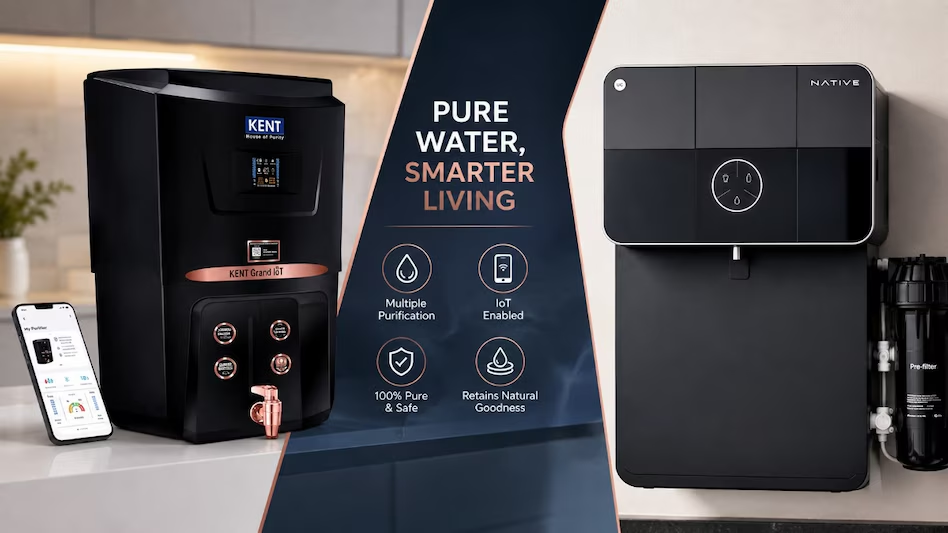
At the centre of the Kent RO Urban Company dispute is Urban Company’s Native RO purifier, launched in 2023 under the brand promise that it needs “no service for two years,” a claim that directly threatens the traditional razor-and-blade business model most purifier makers rely on, where the purifier itself is cheap but annual maintenance contracts and filter replacements generate the real profit. India’s water purifier industry is valued at around Rs. 10,000 crore, and interestingly, the founders of both Kent and Urban Company are IIT Kanpur alumni.
The 2024 Patent Fight
The Kent RO Urban Company dispute didn’t start with advertisements, it began in 2024 when Kent RO filed a patent infringement lawsuit against Urban Company in the Delhi High Court, alleging that the Native RO purifier’s design used Kent’s patented technology without authorization. Kent sought a permanent injunction to halt Urban Company’s manufacturing and sales entirely, but the court rejected an immediate interim injunction, allowing Urban Company to keep selling its purifiers while the case proceeded.
The E-Commerce Delisting Allegation
Another front in the Kent RO Urban Company dispute opened late in 2024, when Urban Company’s Native purifiers disappeared from Amazon and Flipkart right in the middle of the festive sales season. Urban Company alleges that Kent falsely cited a non-existent court order to these e-commerce platforms to get its products delisted, a move it says caused financial losses worth several crores during one of the busiest shopping periods of the year. Urban Company subsequently sued Kent in the Delhi High Court over this delisting incident.
This isn’t the only story touching India’s e-commerce ecosystem this month, our coverage of the Shiprocket IPO Grey Market Premium looks at another company navigating the same online retail space that Kent and Urban Company are now fighting over.
The Latest Ad War
The most recent chapter of the Kent RO Urban Company dispute centres on advertisements Kent released calling Urban Company’s two-year no-servicing claim “completely false,” a “marketing gimmick,” and “fake,” with one ad warning that relying on the purifier for two years without maintenance posed a “serious health and equipment risk.”
Urban Company pushed back hard in court, stating it has invested around Rs. 80 crore advertising this feature and that it holds a 42% market share among purifiers with extended filter-life technology. The company says its system relies on pre-filtration, smart-rinse, anti-scalant dosing, and auto-flush mechanisms, validated through lab testing using roughly 12,000 litres of water at TDS levels of 1,500 to 2,000 PPM.
Kent’s Senior Advocate Rajeshwari Hariharan countered that filter lifespan genuinely depends on variable water quality factors, hardness, turbidity, TDS levels, and consumption volume, all of which differ significantly across India and even between localities within Delhi itself.
What the Delhi High Court Said
Justice Anup Jairam Bhambhani, hearing the case at the Delhi High Court, reportedly told Kent, “You’re not saying why we should buy Kent,” and described the company’s disparagement claims against Urban Company as “very, very wide.” Following these observations, Kent gave an undertaking to withdraw the disputed advertisements within 10 days and to stop publishing similar disparaging claims about Urban Company’s two-year filter-life proposition going forward.
Why This Dispute Matters for Consumers
Beyond the courtroom drama, the Kent RO Urban Company dispute reflects a genuine business threat: if extended filter-life technology like Native RO’s genuinely works as claimed, it could undercut the annual maintenance contract revenue that has long been the most profitable part of the water purifier business for established players like Kent. High-profile commercial disputes like this one are also landing on India’s courts more often as newer, tech-first challengers disrupt established consumer categories, a trend our coverage of the Tribunals Reforms Bill 2026 touches on from a judicial-reform angle.
What Happens Next
The Kent RO Urban Company dispute is far from fully resolved: both the original 2024 patent infringement suit and Urban Company’s separate delisting suit remain pending before the Delhi High Court, alongside Kent’s now-withdrawn advertising campaign. With Native RO’s revenue reportedly running at a Rs. 300 crore annual rate and growing 55% quarter-on-quarter, this fight over technology, advertising, and market share is unlikely to be resolved quickly.
For more business and market updates, check out our Business section.
Frequently Asked Questions
What is the Kent RO Urban Company dispute about?
It’s a multi-part legal battle covering a 2024 patent infringement claim over Urban Company’s Native RO purifier, an e-commerce delisting allegation, and a more recent advertising dispute over Urban Company’s two-year no-servicing claim.
What did Kent’s ads say about Urban Company?
Kent’s advertisements called Urban Company’s two-year no-servicing claim “completely false,” a “marketing gimmick,” and “fake,” and warned of health and equipment risks.
Has Kent agreed to withdraw the ads?
Yes. Kent gave an undertaking before the Delhi High Court to withdraw the disputed advertisements within 10 days and stop making similar claims.
What is Urban Company’s Native RO two-year claim?
Urban Company claims its Native RO purifiers need no servicing or filter replacement for two years, using pre-filtration, smart-rinse, anti-scalant dosing, and auto-flush technology.
Is the Kent RO patent case against Urban Company still pending?
Yes, the 2024 patent infringement suit, along with Urban Company’s separate e-commerce delisting suit, both remain pending before the Delhi High Court.

Pingback: NTPC Reliance Commercial Suit Dispute: Official Rs. 10 Lakh Cost After 20 Years - NovaKhabar
Pingback: Eternal Swiggy Zepto Warehouse Raids: Official Crackdown Shuts 12 Terrible Sites - NovaKhabar
Pingback: Rolex Bijoux Medusa Trademark Lawsuit: Official $50,000 Counterfeit Claim - NovaKhabar
Pingback: FSSAI Notices to Food Brands: Shocking 150+ Warnings Hit Nestle, PepsiCo - NovaKhabar