
Ayodhya to Janakpur Nepal Train Route: Shocking Station Mix-Up
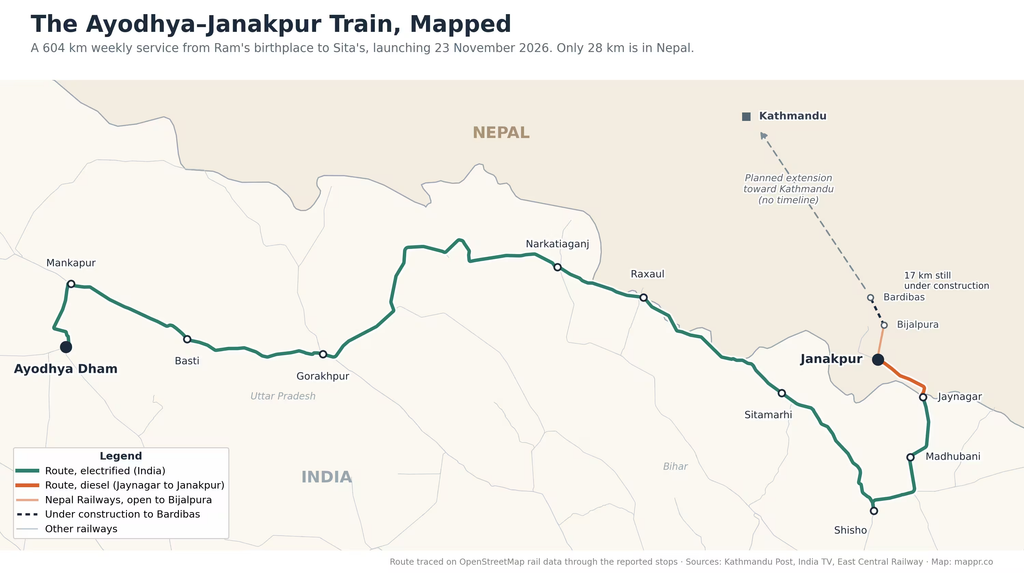
The real Ayodhya to Janakpur Nepal train route doesn’t run through the similarly-named “Janakpur Road” station many travelers assume, it actually goes via Madhubani and Jaynagar before crossing the border into Janakpurdham, which sits inside Janakpur city itself.
Why Does “Janakpur Road” Station Confuse People Planning This Route?
Janakpur Road railway station is a small station in Sitamarhi district, Bihar, India, and despite its name, it has no direct rail connection into Janakpur, Nepal, making it a common point of confusion for anyone planning the Ayodhya to Janakpur Nepal train route.
Several ticket-booking websites list “Janakpur Road to Ayodhya” train options, which are real, running trains, but travelers booking these expecting a route into Nepal end up at a Bihar station unrelated to the actual India-Nepal rail crossing. The name similarity alone has likely misled a meaningful number of travelers over the years into booking the wrong leg of their journey entirely.
This is worth stating plainly before going any further, if your goal is actually reaching Janakpur in Nepal, not a same-named town in Bihar, the trains running to and from Janakpur Road station simply aren’t part of that journey at all, no matter how convenient the name match looks when searching for tickets online.
What Is the Actual Ayodhya to Janakpur Nepal Train Route?
According to Wikipedia’s documentation of the Nepal side of this line, the genuine route runs from Ayodhya to Madhubani by train, then from Madhubani to Jaynagar on a short, frequently-served connecting link, before crossing the India-Nepal border by rail into Janakpurdham station, which is located directly inside Janakpur city in Nepal’s Dhanusha District.
The Ayodhya-to-Madhubani leg is covered by the Saryuyamuna Express, train number 14650, running roughly 570 km and taking approximately 14 hours and 39 minutes. From Madhubani, Jaynagar is a well-connected short hop, with reportedly more than 22 trains running between the two stations, making that segment one of the easiest parts of the overall journey.
How Does the Jaynagar to Janakpurdham Border Crossing Work?
Jaynagar is the Indian border town where travelers transfer onto the Nepal Railways side of the line, which runs as the Jaynagar-Janakpurdham cross-border rail connection, operating DEMU trains that actually cross into Nepali territory.
This India-Nepal rail link has a notable history, it originally ran as a narrow-gauge line from the Rana period before undergoing a gauge conversion, with service into Janakpurdham resuming in March 2022 after that upgrade. Reports indicate the Nepal-side section runs two DEMU train services per day, making onward travel from Jaynagar into Janakpur itself a realistic same-day connection for most travelers arriving from Ayodhya.
This gauge conversion project was genuinely significant for regional connectivity, replacing a century-old narrow-gauge system that had fallen into disrepair with a modern broad-gauge line capable of handling regular passenger traffic between the two countries, which is precisely why this specific border crossing deserves more attention than it currently gets in most travel guides covering the Ayodhya to Janakpur Nepal train route.
Is There a Direct Train Being Planned Between Ayodhya and Janakpur?
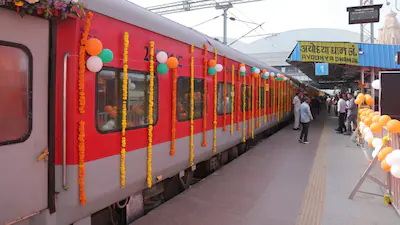
Yes, a direct Ayodhya-Janakpur service has been tested and discussed for an eventual joint inauguration by India and Nepal, though no regular passenger service or confirmed launch date exists as of this writing.
A special test train has already run on part of this corridor, and officials have spoken about a potential joint inauguration tied to a high-level visit between the two countries, but operational details, fares, and an actual launch date remain unconfirmed. Until that direct service becomes real and bookable, the Madhubani-Jaynagar-Janakpurdham route described above remains the genuine way to complete the Ayodhya to Janakpur Nepal train route by rail today.
Once a direct service does launch, it would likely shorten this journey considerably compared to the current multi-leg path, but travelers planning a trip in the near term shouldn’t wait on an unconfirmed timeline when a working route already exists.
What Should You Book for This Journey Right Now?
For travelers today, the practical approach is to book the Ayodhya to Madhubani leg first, arrange onward travel to Jaynagar, and then check current Nepal Railways schedules for the Jaynagar-Janakpurdham service to complete the crossing into Janakpur.
Given that cross-border rail schedules and fares can change, confirming the current Jaynagar-Janakpurdham timetable directly with Nepal Railways or a recent traveler report shortly before your trip is worth the extra effort, rather than relying on older fare figures that may no longer apply. Building in a buffer at Jaynagar between your incoming train and the onward border-crossing service is also a sensible precaution, since connection timings between the Indian and Nepali sides of this journey aren’t always tightly synchronized. Anyone researching the Ayodhya to Janakpur Nepal train route for a pilgrimage or family trip should treat this buffer time as essential planning, not an optional extra. For more travel and infrastructure coverage, check out our National section.
Frequently Asked Questions
Is Janakpur Road station the same as Janakpur, Nepal?
No, Janakpur Road is a separate station in Sitamarhi district, Bihar, India, with no direct rail link into Janakpur, Nepal, despite the similar name.
Which train covers the Ayodhya to Madhubani leg of this journey?
The Saryuyamuna Express, train number 14650, covers this roughly 570 km leg in approximately 14 hours and 39 minutes.
Where does the actual India-Nepal border crossing happen on this route?
The crossing happens between Jaynagar on the Indian side and Janakpurdham on the Nepal side, via the Jaynagar-Janakpurdham rail link.
Has a direct Ayodhya-Janakpur train service launched yet?
No, a direct service has been tested and discussed for a future joint inauguration, but no regular passenger service or confirmed launch date exists as of this writing.
