
Asana OpenAI Codex Software Development: Amazing 500x Cost Savings
Asana OpenAI Codex software development just produced one of the most striking real-world AI productivity case studies yet, turning a project engineers expected to take five more years into a two-week job. Here’s exactly what happened, how the AI agents pulled it off, and what Asana’s own CTO says it does and doesn’t prove.
Asana OpenAI Codex Software Development: What Actually Happened
At the centre of this Asana OpenAI Codex software development story is Enzyme, an outdated testing framework that had fallen out of active maintenance and was blocking Asana from modernising its frontend stack. Migrating away from Enzyme to React Testing Library was originally expected to take at least five more years of engineering work. Using OpenAI’s Codex, Asana’s engineers finished the entire migration in two calendar weeks, with roughly 1.5 weeks of actual focused effort.
The Numbers That Make This Story Remarkable
The cost comparison is what makes this Asana OpenAI Codex software development case study genuinely stand out. The original plan was estimated to cost around $6 million in engineering time. The AI-driven approach, covering model usage and infrastructure, came out to roughly $12,000 total, a reduction of around 500 times the original estimate.
How the AI Agents Actually Did the Work
The process itself was more structured than simply letting an AI loose on the codebase. Asana’s engineering team gave Codex a five-sentence prompt describing the task, after which up to four coding agents worked in parallel, each operating on its own separate copy of the codebase. A human engineer checked progress and reviewed every proposed change twice a day throughout the project, keeping direct oversight over what got merged.
What Asana’s CTO Said
Asana Chief Technology Officer Amritansh Raghav offered a notably measured take on the result rather than treating it as a universal breakthrough: “Not every years-long project will collapse into weeks. But agents can give engineers more room for craft, and make once-impossible work worth attempting.”
Is This Realistic for Every Company?
Raghav’s own framing is worth taking seriously before treating this Asana OpenAI Codex software development result as a template for every engineering team. This particular project was well-suited to AI-assisted automation, a large, mechanical migration with a clear before-and-after state, rather than a project requiring constant new architectural decisions. Human engineers still reviewed every change twice daily, meaning oversight and judgment weren’t removed from the process, just redirected toward reviewing rather than writing every line.
What Is OpenAI Codex, and Why Does This Matter Broader?
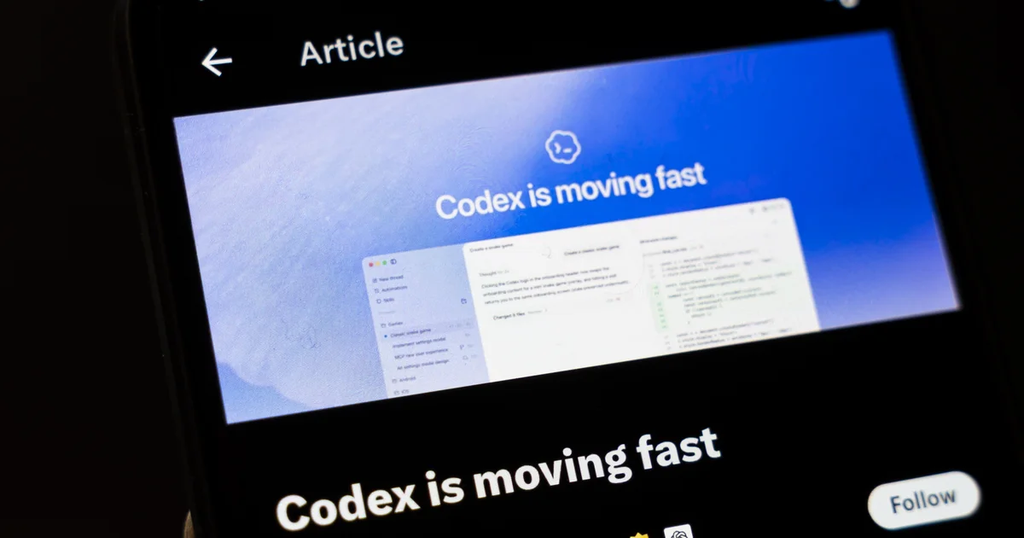
Zooming out from this specific Asana OpenAI Codex software development story, OpenAI Codex launched as Codex CLI in April 2025 as an AI coding agent built for tasks like writing code and fixing bugs. By mid-2026, it had grown to more than 2 million weekly active users, and OpenAI has been positioning it as a broader enterprise agent platform rather than a narrow coding assistant. In March 2026, OpenAI also introduced Codex Security, a dedicated application-security agent designed to identify and fix software vulnerabilities, extending the same underlying approach beyond feature development into security work.
Developer Tools Are Having a Big Year
AI-assisted development tools have been a major theme across the developer tools space this year, our coverage of GitHub Universe 2026 registration looks at how the developer conference circuit itself is increasingly built around exactly this kind of agentic coding shift.
AI Infrastructure Behind the Scenes
Stories like Asana’s depend on a huge amount of AI compute capacity running behind the scenes, our coverage of the L&T NVIDIA B300 AI Factory looks at the kind of infrastructure buildout that makes agentic coding tools like Codex possible at scale. For the original case study details, OpenAI’s own write-up is the primary source.
What Happens Next
Asana’s own CTO has been clear that this result won’t generalise to every project, but it does add a concrete, verified data point to the broader conversation about how much of routine software engineering work AI agents can realistically take on, provided the work is well-scoped and human review stays in the loop.
For more technology updates, check out our Technology section.
Frequently Asked Questions
What is the Asana OpenAI Codex software development story about?
It’s a real-world case study of Asana using OpenAI’s Codex coding agent to complete a years-long engineering migration in just two weeks, at a fraction of the originally estimated cost.
What did Asana achieve with OpenAI Codex?
Asana used Codex to migrate its frontend testing framework away from the outdated Enzyme system in two weeks, a project originally expected to take at least five more years.
How much money did Asana save using Codex?
The AI-driven approach cost around $12,000 in model and infrastructure costs, compared to an original estimate of roughly $6 million, a reduction of about 500 times.
How many AI agents worked on Asana’s project?
Up to four coding agents worked in parallel, each on a separate copy of the codebase, based on a five-sentence prompt from Asana’s engineering team.
Did humans review the AI’s work?
Yes. A human engineer checked progress and reviewed every proposed change twice a day throughout the project.
Will every company see results like this with AI coding tools?
Not necessarily. Asana’s own CTO said not every years-long project will collapse into weeks this way, since this project was particularly well-suited to structured, large-scale automation.

Pingback: Razorpay AI Buildathon: Amazing Rs. 75,000 Stipend, No Resume Needed - NovaKhabar
Pingback: Sridhar Vembu Sales Advice Entrepreneurs: 5 Amazing Real Lessons - NovaKhabar
Pingback: GPT-6 Astra Release Date: Shocking 2-Tier Rollout Explained