
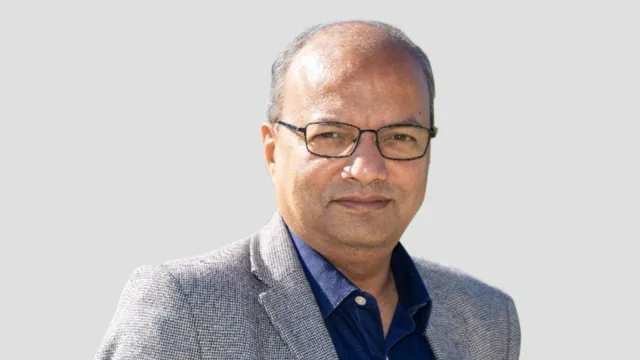
Manindra Agrawal AI Education IIT Kanpur: Amazing Reform Ends Rote Learning After 67 Years
The Manindra Agrawal AI education IIT Kanpur story is not about a flashy new AI course. It is about something quieter: IIT Kanpur rethinking how it teaches everything, because AI has already changed why students need to learn it. Director Professor Manindra Agrawal says the real frontier now is teaching quality itself, not another curriculum update, and that shift is playing out across classrooms, labs and even how student feedback gets used.
What the Manindra Agrawal AI Education IIT Kanpur Reform Actually Changes
Most Indian universities are responding to AI by adding new electives in machine learning or data science. The Manindra Agrawal AI education IIT Kanpur approach goes a layer deeper. Instead of only updating what gets taught, the institute is studying and redesigning how it gets taught, through a dedicated body called the Centre for Educational Research and Teaching Excellence, or CERTEX.
CERTEX runs pedagogy research, faculty workshops and teaching-assistant training, then measures whether any of it actually improves student learning outcomes. Agrawal frames this bluntly: “Teaching itself should be studied, measured and improved through evidence.” Curriculum tweaks can be approved in a single committee meeting; changing how professors actually teach in a classroom takes years of sustained effort.
Why AI Forced This Rethink, Not Just a New Syllabus
The reasoning behind the Manindra Agrawal AI education IIT Kanpur push traces directly back to what generative AI tools can now do on their own. If a chatbot can retrieve facts and draft answers instantly, memorising those facts stops being the differentiator a degree is supposed to provide. Agrawal’s stated position is that higher education now has to build judgment, creativity and the ability to frame problems that have no obvious template, since those are precisely the things machines still cannot do well.
That is why IIT Kanpur is investing in interdisciplinary flexibility, honours degrees, double majors and a framework called SCHEME that blends engineering with economics, communication and the humanities. The goal is graduates who can define an unfamiliar problem, not just execute a familiar solution.
From First-Year Labs to Real Hardware
Under the Manindra Agrawal AI education IIT Kanpur model, research exposure starts far earlier than final year. Programmes like Labs Introduction, the Engineers’ Conclave and an expanded SURGE undergraduate research scheme put first- and second-year students into open-ended lab problems, not just theory classes.
The institute points to tangible output from this approach: a portable AI-powered soil-testing device called Bhu-Parikshak that gives fertiliser recommendations in about 90 seconds, a low-cost heart-support device called Hridyantra, and student-built quadruped robots and inspection drones. None of that came from a single AI elective — it came from students given lab access and open problems early, then judged on what they could build rather than what they could recall.
Reforms like this are not happening in isolation. India’s education sector has seen a broader push this year to get students building with AI directly rather than only studying it in theory — the Razorpay AI Buildathon, which skips resumes entirely in favour of a stipend-backed hands-on challenge, reflects the same instinct: judge students on what they can actually build with AI tools, not what they can recite about them.
Feedback as Evidence, Not Criticism
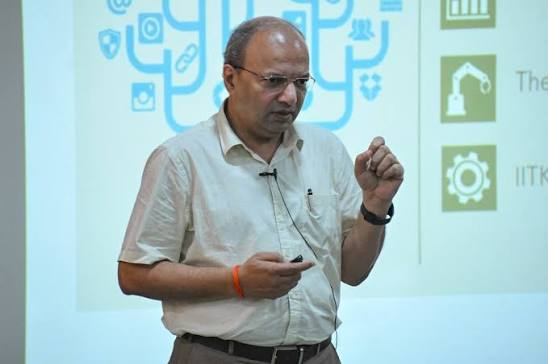
A less obvious part of the Manindra Agrawal AI education IIT Kanpur reform is how the institute treats classroom feedback. Rather than filing student evaluations away as a routine formality, CERTEX treats that feedback as data — comparing what a course intended to teach against what students actually retained, then feeding the gap back into faculty training.
This mirrors a pattern showing up well beyond campuses. As AI reshapes what a job actually requires day to day, organisations are having to treat their own workforce the same way IIT Kanpur now treats its students: as an evidence-based challenge to be measured, not once, but continuously. Wipro’s AI upskilling platform for its 240,000-strong workforce is a corporate-side version of exactly this problem — figuring out how to actually retrain people for an AI-heavy job market, rather than assuming a single training module solves it.
An Institute-Wide Bet, Not a Single Department’s Project
What makes the Manindra Agrawal AI education IIT Kanpur effort worth watching is its scope. This is not one enthusiastic computer science department running a pilot — it is the director’s office treating pedagogy as a research problem for the entire institute, backed by a dedicated centre, measurable feedback loops and funding for student-led experimentation through programmes like the Future Secure AI Innovation initiative and FinTech Spark.
For more on Agrawal’s own background, IIT Kanpur’s official faculty profile details his earlier work co-creating the AKS primality test, one of the reasons his shift toward pedagogy research is being watched closely inside Indian academia.
Whether other IITs and universities adopt anything like CERTEX will likely depend on whether IIT Kanpur can show, with actual outcome data, that measuring and retraining how professors teach moves the needle more than one more AI-focused course ever could. If it does, the Manindra Agrawal AI education IIT Kanpur model could end up as the template other engineering colleges copy, rather than a one-off experiment confined to a single campus.
Frequently Asked Questions
Who is Manindra Agrawal at IIT Kanpur?
He is a computer scientist and the Director of IIT Kanpur since April 2024, known for co-developing the AKS primality test and for research in computational complexity theory.
What is CERTEX at IIT Kanpur?
CERTEX, the Centre for Educational Research and Teaching Excellence, is the engine behind the Manindra Agrawal AI education IIT Kanpur reform — it studies and improves how faculty teach using pedagogy research, faculty workshops and student-feedback analysis.
How is AI changing engineering education in India?
AI has reduced the value of pure information recall, pushing institutions like IIT Kanpur to emphasise critical thinking, interdisciplinary problem-solving and early hands-on research instead of rote memorisation.
What is the SURGE programme at IIT Kanpur?
SURGE is IIT Kanpur’s undergraduate research scheme that places students into open-ended lab problems from the early years of their degree, rather than waiting until the final year.