
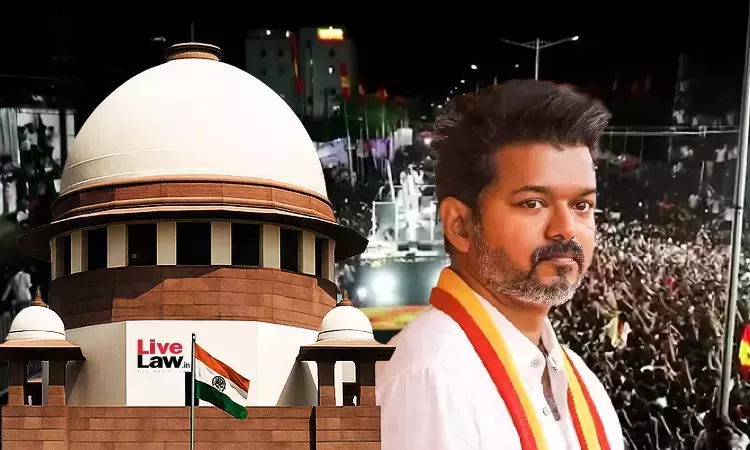
NK Goswami AI Governance Plea: Official 2026 Supreme Court Order on AI Rules
The NK Goswami AI governance plea was disposed of by the Supreme Court on August 13, 2026, with the bench declining to frame judicial guidelines on government use of AI and instead asking the Centre to consider a representation already submitted on the issue. Here’s a complete breakdown of what the petition sought, what the court said, and what happens next.
What Is the NK Goswami AI Governance Plea About?
The NK Goswami AI governance plea was filed as W.P.(C) No. 837/2026, titled Narendra Kumar Goswami v. Union of India, by advocate Narendra Kumar Goswami, who appeared in person before the Supreme Court. The petition raised concerns over the absence of a comprehensive statutory framework governing how AI is used by government authorities, particularly in areas that can directly affect people’s access to food, health benefits, wages, pensions, scholarships, and welfare subsidies. It specifically flagged government use of AI in welfare allocation systems, predictive policing, facial recognition, content moderation, and surveillance as high-risk applications operating without clear legal safeguards.
What Did the Petition Ask For?
The NK Goswami AI governance plea sought three broad directions from the court:
- A direction to the Centre to constitute a high-powered expert committee to frame binding guidelines on AI ethics, mandatory algorithmic impact assessments and bias audits, transparency in AI-based surveillance and content moderation, human-in-the-loop oversight for all high-risk governmental AI systems, and data protection safeguards
- A direction to the Centre to file an affidavit disclosing all existing and proposed high-risk AI systems used by ministries or agencies in welfare, policing, surveillance, and content regulation
- A direction to Parliament to enact comprehensive legislation specifically regulating the development and deployment of AI by the State
What the Supreme Court Said
A bench comprising Chief Justice of India Surya Kant, along with Justices Joymalya Bagchi and V Mohana, heard the matter and disposed of the petition without expressing any opinion on its merits. CJI Surya Kant told Goswami: “Two reasons it cannot be addressed by us. One is it is a highly technical issue. We are not the experts. And this is a policy domain.” The Supreme Court of India instead asked the Centre to consider the representation Goswami had already submitted, and gave him the liberty to supplement it further if needed.
The February 2026 Representation
Notably, the NK Goswami AI governance plea wasn’t the petitioner’s first attempt to raise these concerns. Goswami had already submitted a written representation to the Centre in February 2026, comprehensively addressing many of the same issues later raised in this petition, months before approaching the Supreme Court directly. The court’s decision to point back to that representation, rather than issue fresh directions, effectively keeps the matter within the executive’s policy-making domain rather than the judiciary’s.
Why This Plea Matters
India’s AI infrastructure and adoption have been expanding rapidly this year, our coverage of the L&T NVIDIA B300 AI Factory looks at just how quickly the country’s AI compute capacity is scaling, a pace that governance and regulatory frameworks haven’t necessarily kept up with, which is precisely the gap this petition tried to highlight.
Judicial Restraint on Policy Matters
The Supreme Court’s approach here reflects a broader pattern of judicial restraint on matters it considers to fall within the executive’s policy domain rather than the court’s own remit. Parliament and the executive have been active on several other regulatory fronts this year too, our coverage of the Tribunals Reforms Bill 2026 covers a case where lawmakers, rather than the courts, took the lead on overhauling an existing institutional framework.
What Happens Next
No specific deadline was imposed on the Centre to respond to Goswami’s representation. The court’s order simply asks authorities to “consider the suggestions for the purpose of taking appropriate measures,” leaving the actual timeline and substance of any AI governance framework entirely up to the government going forward. Goswami retains the liberty to supplement his representation, but for now, the NK Goswami AI governance plea ends without any binding rules on how the government can deploy AI in welfare, policing, or surveillance systems.
For more national news and policy updates, check out our National section.
Frequently Asked Questions
What is the NK Goswami AI governance plea?
It’s a Supreme Court petition, W.P.(C) No. 837/2026, filed by advocate Narendra Kumar Goswami seeking judicial guidelines to regulate government use of AI in areas like welfare, policing, and surveillance.
What did the Supreme Court decide on the NK Goswami AI governance plea?
The court disposed of the petition without ruling on its merits, calling it a policy matter outside judicial expertise, and asked the Centre to consider a representation Goswami had already submitted.
What did the petition ask the government to do?
It sought binding AI ethics guidelines, mandatory algorithmic impact assessments, a government affidavit disclosing high-risk AI systems in use, and comprehensive parliamentary legislation on AI.
Who heard the NK Goswami AI governance plea?
A bench comprising Chief Justice of India Surya Kant and Justices Joymalya Bagchi and V Mohana.
Did the Supreme Court set a deadline for the government to respond?
No. The court did not impose any specific deadline, simply asking the Centre to consider the suggestions and take appropriate measures.

Pingback: Gaurav Bhatia Defamation Suit CJP: Official Rs. 2 Crore Delhi HC Update