
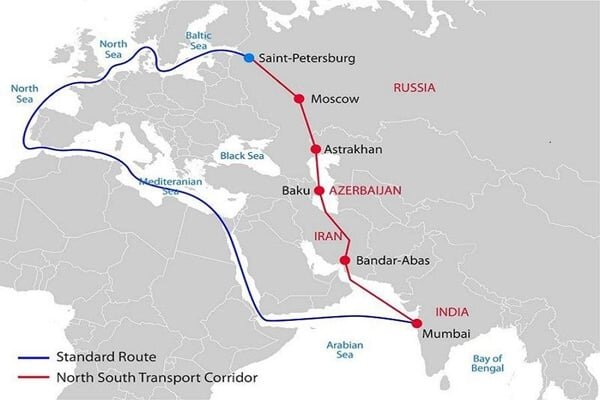
Russia India Railway Route: Amazing New Proposal Spans 4 Countries
A Russia India railway route has moved from distant idea to active diplomatic conversation, after a senior Russian official floated the concept of a direct rail link connecting Russia all the way to the Indian Ocean. Here’s a complete breakdown of the proposal, the route being discussed, and why it’s suddenly back on the table.
What Is the Russia India Railway Route Proposal?
Russian Deputy Prime Minister Marat Khusnullin raised the idea in an interview with Russian news agency TASS, published August 8, 2026. His exact words were direct: “A rail link to the Indian Ocean should also be explored. Risks related to the Bosphorus and the Strait of Hormuz might require alternative routes: through Turkmenistan, Iran, Afghanistan, and Pakistan.”
In other words, this isn’t a finalized plan or signed agreement, it’s a senior official publicly suggesting the idea should be studied, which is often how major infrastructure proposals of this scale begin.
Why Is Russia Proposing This Now?
The timing isn’t a coincidence. Following US-Israeli strikes on Iran and Tehran’s retaliatory maritime posture, both the Strait of Hormuz and the Bosphorus, two of the most critical maritime chokepoints for Russian and Indian trade, have become considerably less reliable. A land-based Russia India railway route would give both countries a way to move goods without depending on those vulnerable sea corridors.
The Proposed Route
Based on Khusnullin’s comments, the railway would run through:
- Turkmenistan
- Iran
- Afghanistan
- Pakistan
before reaching India and providing access to the Indian Ocean. Some reports also mention an alternative option running via Uzbekistan and the proposed Trans-Afghan Railway toward Pakistan’s southern ports, suggesting Russia may be weighing more than one possible corridor rather than committing to a single fixed path.
What About INSTC and Existing Rail Links?
This isn’t Russia’s first attempt at rail connectivity toward India. The International North-South Transport Corridor (INSTC), a multi-modal route linking India, Iran, Russia, and Azerbaijan by rail and sea, has been in development for years. In 2024, Russia successfully sent two trainloads of coal to India via the INSTC route transiting through Iran, proving the concept could work in practice.
However, the same US strikes on Iran’s southern ports that made Hormuz risky also disrupted the INSTC’s usability, which is a big part of why Russia is now exploring this new eastward alternative through Central Asia, Afghanistan, and Pakistan instead.
The Pakistan Challenge
Here’s where the proposal runs into its biggest obstacle: any Russia India railway route passing through Pakistan requires cooperation between India and Pakistan, two countries with deeply strained relations. Analysts following the proposal expect both Russia and China to apply diplomatic pressure on India and Pakistan to cooperate, given how much both countries stand to gain from secure, land-based energy and trade access.
Whether that pressure translates into actual cooperation on the ground remains an open question, and it’s the single biggest reason this remains a “should be explored” idea rather than a project with a construction timeline.
What Are the Practical Challenges?
Beyond the India-Pakistan relationship, a rail corridor like this faces several other real hurdles:
- Financing: A multi-country railway of this scale requires enormous capital investment, likely spread across several governments.
- Difficult terrain: The route passes through mountainous and, in parts, politically unstable regions of Afghanistan.
- Border crossings: Four international borders would need coordinated customs and security arrangements.
- Railway gauge differences: Countries along the route use different railway track gauges, which typically requires either gauge conversion or transshipment points.
- Security concerns: Parts of the route pass through regions with ongoing security challenges, particularly in Afghanistan.
Has India Responded?
As of now, there’s no official Indian government response to Khusnullin’s comments. Given the early, exploratory nature of the proposal, and the significant diplomatic complexity of routing it through Pakistan, it’s likely India will wait for a more concrete proposal before commenting formally.
For more updates on India’s international relations and infrastructure news, check out our National section, including our coverage of the Kanpur Lucknow Expressway.
Frequently Asked Questions
What is the Russia India railway route proposal?
It’s a proposal by Russian Deputy Prime Minister Marat Khusnullin to build a rail link from Russia to the Indian Ocean, potentially passing through Turkmenistan, Iran, Afghanistan, and Pakistan.
Why is Russia proposing a new railway route to India now?
US-Israeli strikes on Iran and the resulting instability around the Strait of Hormuz and the Bosphorus have made existing maritime and rail routes less reliable, prompting Russia to explore land-based alternatives.
Which countries would the Russia India railway route pass through?
The primary route discussed passes through Turkmenistan, Iran, Afghanistan, and Pakistan, with an alternative option via Uzbekistan and the proposed Trans-Afghan Railway also mentioned.
Is the Russia India railway route the same as INSTC?
No, it’s a separate, newer proposal, though it shares the same underlying goal as the International North-South Transport Corridor: reliable land-based connectivity between Russia and India.
What is the biggest challenge facing this railway proposal?
The route’s dependence on Pakistan is widely seen as the biggest hurdle, given the strained relationship between India and Pakistan.

Pingback: HPCL MRPL Oil Import Volumes: Official 5 Million Barrel Shift to Improve Security - NovaKhabar