
ITAT Section 269SS Cash Penalty Deleted: Official 2026 Rulings
Multiple ITAT Section 269SS cash penalty deleted rulings have emerged across 2026, with tribunal benches in Chandigarh, Delhi, Ahmedabad, Hyderabad, and Chennai all striking down Section 271D penalties worth anywhere from a few lakh rupees to over ₹41 crore.
What Is Section 269SS and the 271D Penalty It Triggers?
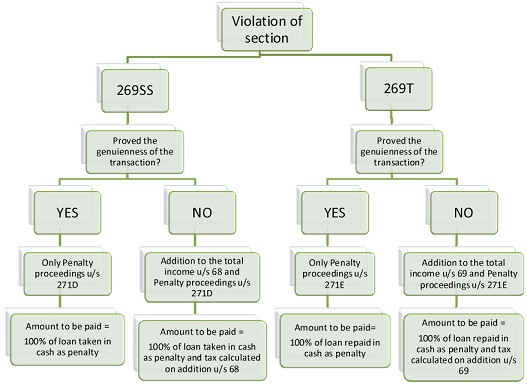
Section 269SS of the Income Tax Act restricts a person from accepting a loan, deposit, or specified sum of ₹20,000 or more in cash, requiring such transactions to go through an account payee cheque, bank draft, or electronic means instead.
Section 271D is the actual penalty provision that applies when someone violates 269SS, and it can equal 100% of the amount accepted in cash, making it a genuinely severe consequence rather than a token fine. This is exactly why so many taxpayers appeal to the ITAT when an assessing officer imposes a 271D penalty, the financial stakes are high enough to justify fighting the order.
The Income Tax Appellate Tribunal functions as the second level of appeal for income tax disputes in India, sitting above the Commissioner of Income Tax (Appeals) and below the High Courts, which is where most of these 269SS penalty disputes ultimately get resolved after an initial appeal fails to satisfy either side.
Why Has ITAT Section 269SS Cash Penalty Deleted Status Become So Common in 2026?
According to Taxscan’s coverage of several recent rulings, a clear pattern has emerged where tribunals across different cities are reaching the same core conclusion through similar legal reasoning, not every cash transaction automatically falls within Section 269SS’s scope just because it exceeds ₹20,000.
The recurring theme across these ITAT Section 269SS cash penalty deleted decisions is that assessing officers have been applying the provision too broadly, treating any large cash receipt as an automatic violation without carefully checking whether the transaction actually qualifies as a “loan,” “deposit,” or “specified advance” under the law’s precise definition.
Does Cash From a Property Sale Count as a “Loan or Deposit” Under 269SS?
Generally no, according to several 2026 ITAT rulings, cash received as the final sale consideration at the time of registering an immovable property sale is not the same thing as a loan, deposit, or advance.
In Chandigarh, the tribunal deleted a ₹7.41 lakh penalty on a taxpayer named Surjit Kaur for assessment year 2017-18, relying on an earlier Chennai ITAT decision and a CBDT circular to hold that 269SS applies only to loans, deposits, or advances tied to immovable property, not the final payment itself. A similar outcome played out in Delhi, where the tribunal deleted a ₹65 lakh penalty in the Ishwar Singh Dabas case, and in Ahmedabad, where a ₹1.01 crore penalty was deleted in the Patel Prakashchandra Ambalal HUF matter for a similar assessment year.
What Procedural Defects Have Led to 269SS Penalties Being Deleted?
Beyond the property-sale question, several ITAT Section 269SS cash penalty deleted outcomes came down to pure procedural failures by the tax department rather than the underlying transaction itself.
In one case, a penalty was cancelled because it had been imposed by an officer who no longer had jurisdiction to do so after a rule change took effect from April 1, 2025. In another, from Cuttack, the penalty was found unjustified because it was tied to the wrong assessment year entirely. A Chennai ruling involving Anamallais Bus Transport went even further, upholding the deletion of a massive ₹41.74 crore penalty on the basis that an unpaid share-purchase liability recorded only as a journal entry was never an actual cash loan or deposit in the first place.

Not Every 269SS Penalty Gets Deleted, What’s the Exception?
It’s important not to overstate this trend, a Bengaluru case involving a taxpayer named Harisha saw the tax department specifically argue that a cash loan above ₹20,000 was a clear, gross violation of Section 269SS, pushing back against an earlier deletion of the penalty. The case specifically involved an actual cash loan rather than property sale consideration, which is exactly the kind of transaction Section 269SS was designed to restrict in the first place.
This shows that ITAT outcomes genuinely depend on the specific facts of each case, the nature of the transaction, the assessing officer’s procedural conduct, and the quality of evidence presented, rather than following one single automatic rule in every situation. Anyone hoping to rely on these precedents should focus on how closely their own transaction matches the facts of a specific case, not just the general headline outcome. This article is for informational purposes only and isn’t a substitute for professional tax or legal advice, anyone facing an actual 269SS or 271D penalty notice should consult a qualified chartered accountant or tax lawyer. For more business and finance coverage, check out our Business section.
Frequently Asked Questions
What is the difference between Section 269SS and Section 271D?
Section 269SS sets the actual restriction on accepting cash loans, deposits, or specified sums of ₹20,000 or more, while Section 271D is the separate penalty provision that applies when someone violates that restriction.
Does receiving cash from selling my house violate Section 269SS?
Not necessarily, several 2026 ITAT rulings have held that cash received as final sale consideration for immovable property isn’t automatically treated as a loan, deposit, or advance under 269SS.
Can a tax officer impose a Section 271D penalty without recording proper satisfaction?
No, several tribunal rulings have deleted 271D penalties specifically because the assessing officer failed to record the required satisfaction or initiate penalty proceedings correctly.
What cash amount triggers the Section 269SS restriction?
The restriction applies to cash loans, deposits, or specified sums of ₹20,000 or more, which must instead go through an account payee cheque, bank draft, or electronic payment method.
