
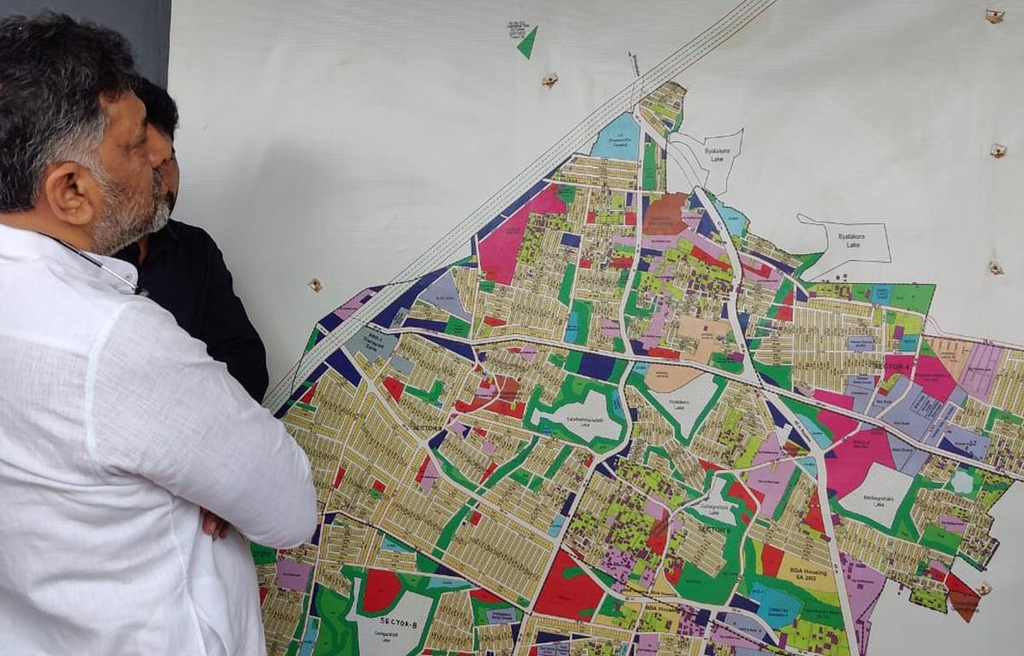
Shivaram Karanth Layout BDA: Official 60:40 Scheme Status 2026
Shivaram Karanth Layout BDA site allotment remains in limbo even after Karnataka’s Chief Minister personally distributed compensation to land-losing farmers in August 2026, with no confirmed date yet for when the Bangalore Development Authority will actually open applications for the public.
What Is the Shivaram Karanth Layout BDA Project?
The Shivaram Karanth Layout BDA project is a large residential layout being developed by the Bangalore Development Authority, originally planned across roughly 3,200 acres and approved under a scheme valued at ₹5,337 crore.
Buildings had already come up on parts of the originally notified land by the time acquisition proceeded, which is why the BDA now expects to actually acquire closer to 2,500 acres in practice. The layout is meant to eventually hold tens of thousands of residential sites, making it one of the largest single housing projects the BDA has ever attempted in Bengaluru.
The project is named after Dr. Shivaram Karanth, a prominent Kannada writer and environmentalist, and sits alongside the BDA’s other major layouts as part of the authority’s broader push to meet Bengaluru’s persistent housing demand. The Karnataka government separately picked nine construction firms to handle basic infrastructure work across different blocks of the layout, with individual contracts reportedly ranging between roughly ₹216 crore and ₹280 crore, giving a sense of just how large-scale the civil works involved in forming this layout actually are.
How Does the Farmer Land-Compensation Formula Work?
Under the Shivaram Karanth Layout BDA scheme, farmers who surrender one acre of undeveloped land are compensated under a 60:40 formula, receiving 9,583 square feet of developed sites in return rather than a straight cash payout.
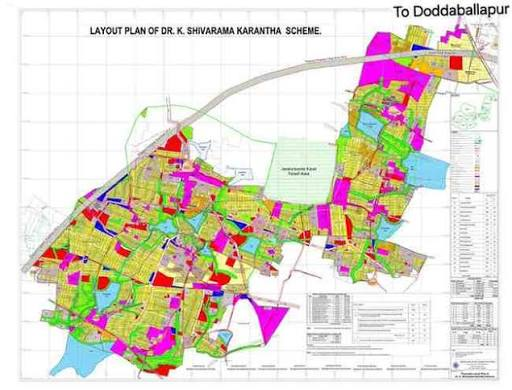
According to Deccan Herald’s reporting, this arrangement followed a Supreme Court directive on how affected landowners should be compensated for a public housing project built on their land. This formula has been the central mechanism the BDA relies on to justify taking large tracts of farmland in exchange for a smaller share of fully developed, infrastructure-ready plots.
Why Has Shivaram Karanth Layout BDA Site Allotment Been Delayed for So Long?
Court intervention is the main reason, a Supreme Court-appointed committee opposed premature site allotment back in 2023, warning it would amount to a “paper allotment” if sites weren’t physically formed on the ground first.
This concern wasn’t just procedural caution, the committee’s underlying worry was that handing out site allotment letters before roads, drainage, and other basic infrastructure actually existed on the ground would leave landowners holding paper entitlements to plots they couldn’t practically occupy or build on for years afterward.
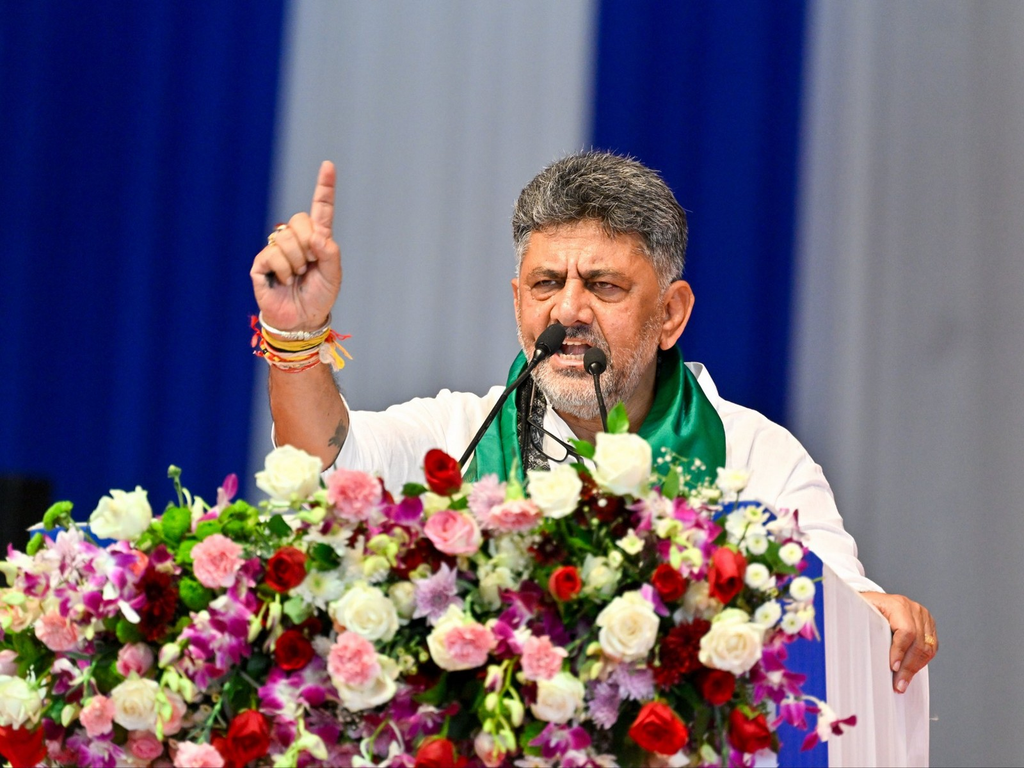
Chief Minister D.K. Shivakumar said in August 2026 that High Court status-quo orders had delayed the compensation process for roughly three years, causing significant revenue loss to the government in the process. He specifically noted that the stay was imposed just as the state was preparing to invite site-allotment applications, effectively freezing the process at a critical final stage rather than at the project’s outset.
What Happened at the August 2026 Compensation Event?
Chief Minister D.K. Shivakumar personally distributed compensation to land-losing farmers and landowners in August 2026, marking a significant step after years of court-related delay.
As part of the event, he announced that the names of roughly 3,200 farmers who contributed land to the Shivaram Karanth Layout BDA project would be inscribed on a “Wall of Gratitude” to formally recognize their contribution. This was framed as both a practical compensation milestone and a symbolic gesture toward landowners who had waited years through repeated legal delays.
Has the BDA Actually Opened Site Applications Yet?
As of this writing, there is no confirmed report that the BDA has opened online applications for Shivaram Karanth Layout sites, despite earlier expectations that the window would open by the end of July 2026 following Karnataka High Court approval.
The High Court, acting in line with Supreme Court directions, has permitted the BDA to allot sites specifically to land losers who surrendered land for the project, but this permission covering farmer allotments is not the same as a public application window actually being live. Anyone checking the Shivaram Karanth Layout BDA application status should rely only on the BDA’s official website (bdabangalore.org) for confirmation, since expected dates have already slipped once.
How Many Sites Are Available and What Will They Cost?
Reported figures for the site split vary across sources, generally ranging between roughly 16,000 and 18,400 sites reserved for land-losing farmers and revenue site holders, with the remaining public allotment share reported anywhere from about 2,500 to 8,000 sites depending on the report.
Given this inconsistency, treat any specific site-count figure as approximate until the BDA publishes an official breakdown. On pricing, reports put the rate at ₹4,900 per square foot, though the BDA has not confirmed whether this will be revised before the next round of allotments actually begins. For more updates on government housing and infrastructure projects, check out our National section.
Frequently Asked Questions
What will the application fee be for Shivaram Karanth Layout sites?
Reports indicate a fee of ₹500 for SC/ST applicants and ₹1,000 for General category applicants, plus a separate ₹2,000 registration fee, which is non-refundable if the applicant doesn’t secure a site.
Who gets priority for site allotment in this layout?
Land-losing farmers and landowners who surrendered land for the project get priority under the 60:40 compensation scheme, followed by revenue site holders, with the remaining sites going to the general public.
Is the Shivaram Karanth Layout BDA application process fully online?
Yes, reports indicate the BDA plans to run the application process entirely online once it formally opens, though the exact opening date remains unconfirmed as of this writing.
Has the High Court’s stay on the project been completely lifted?
Not entirely, the High Court has permitted allotment specifically to land-losing farmers following Supreme Court directions, but this is a narrower permission than a full, unrestricted public application process being live.
